


How Do I Choose the Best Suit to Wear to A Meeting or Job Interview?

Updated: Aug 5

In 2026 for many men, daily formal dressing for the office is no longer a requirement. Many corporate workplaces have become more informal in their dress styles, particularly with a post-COVID-19 work environment.
But for others, they are still required to wear formal business suits every day, especially when attending an important meeting with a client or are going to interview for a corporate position.
If you have not been exposed to this type of business suit before or just need some reminders or new information about what to wear to an office or an interview, here are some simple guidelines to follow when purchasing and wearing a business suit.
What is a Business Suit?
The modern man's business suit is based on the classic lounge suit; however, do not be fooled by the term because it was also considered a type of formal daytime apparel (but not quite as formal as an evening suit, tuxedo or morning dress). Today, there are many types of men's designer suits or men's business suits; however, at Suits Unlimited, we define the business suit as being the most formal type of men's suit worn in the office and it would not look out of place in a boardroom.
Although the styles of business suits are not as popular as they used to be due to the relaxed workplace dress codes, there are many types of business suits that can be worn for today's types of jobs and/or important business meetings.
The traditional business suit for men is a two-piece suit with a suit jacket (with single-breasted or double-breasted suit) and tailored trousers that may have pleats or be flat-fronted. Business suits are typically in navy blue, charcoal grey, light grey, or blue and/or in a plaid/check pattern.
Single Breasted vs. Double Breasted
Single-breasted business suits (i.e., with two or three-button fronts) are the most frequently worn type of business suit for men at work (in fact, the basic shape and design of most styles of business suits for men have not changed much in almost 100 years). Periodically, double-breasted business suits (DB suits), which were the power suits of the 80s, are now making somewhat of a revival.
Double-breasted business suits are considered the most formal type of business suit. Double-breasted suits are styled to enhance the shoulder line; therefore, they provide a much sooner, more well-defined shoulder line.
Many double-breasted business suits are cut fuller to provide a more comfortable fit. However, you should keep in mind that there is a fine line between looking smart and looking sloppy when selecting a business suit.
Business Suit Style Tips
The most significant reason why men wear business suits or suits for their job interviews is not for their styling/appearance, but rather to convey professionalism, capability, and leadership in the corporate environment. It is possible for men to express some personal style when choosing and wearing business suits; however, the primary goal for choosing a business suit is to look smart, as opposed to making a fashion statement.
The best style tip you can receive regarding business suits for men is to find the cut that fits you and buy several (3-4) different colors and textures in the same cut. By making this initial investment, you will always have an unlimited number of business suit combinations to wear over the next few years.
Do's and Don'ts of Business Suits
Tailored clothing comes with some specific rules, including a number of older - primarily listed as "never wear brown in the city," that have fallen out of favor by the general public. However, there are some timeless "rules" regarding wearing tailored clothing that continue today.
For example, if you are wearing a single-breasted business suit with three buttons, you should follow the "once, always, never" rule when buttoning your jacket. The "once, always, never" rule means you button your top button once, your middle button always, and your bottom button never.
When sitting down, you can unbutton your jacket; however, the same rule does not apply to double-breasted jackets. On a double-breasted jacket, it is traditional to button all buttons with buttonholes on double-breasted jackets; however, it is acceptable to leave the bottom button unbuttoned.
Unlike single-breasted jackets, all buttons on double-breasted jackets should remain buttoned when seated.
Business Suit Color
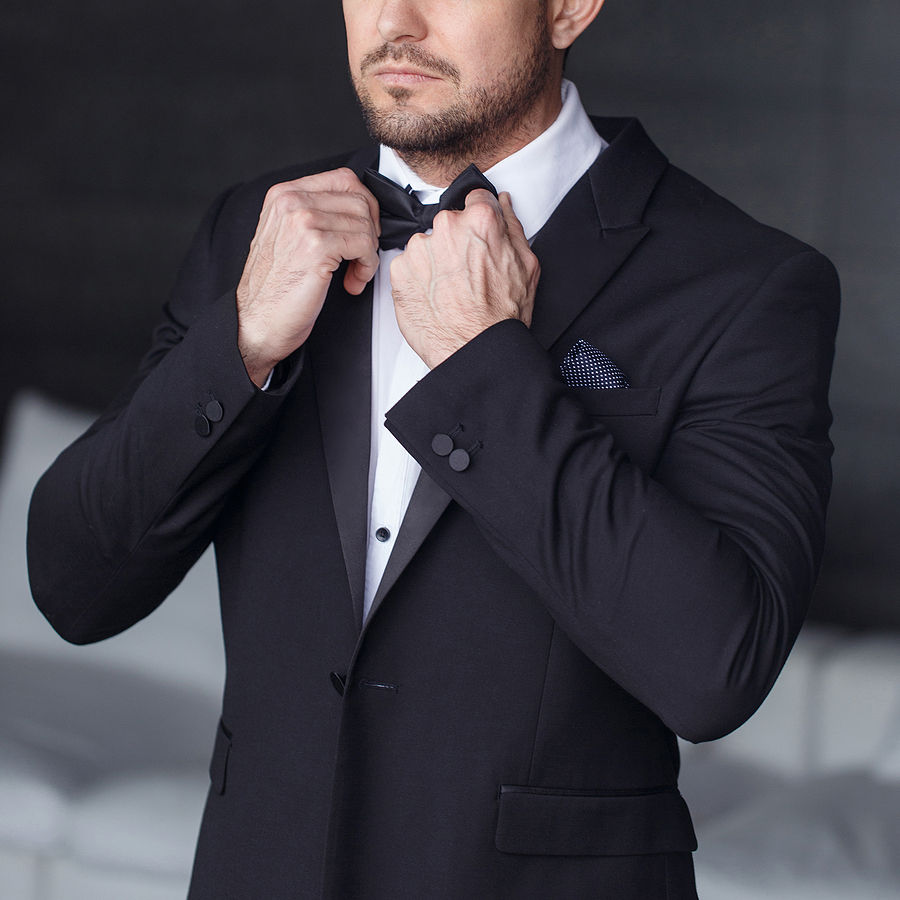
Traditionally, business suits; i.e., business suits or suits for business meetings, should be navy, grey, or midblue; while black is generally not a good color choice for business suits because most men wear black suits only for their job or when attending a funeral.
Plain vs. Checked Business Suits
When it comes to business suits, plain suits are obviously seen far more often than checked pants; however, checked/business suits can be appropriate for a business suit when it comes to business meetings; although, historically, checks have been used for casual or outer and not business.
Fabric for Business Suits
Wool is a very popular manufacturer's fabric in business suits for men. Worsted wool is an all-season, all-purpose choice. However, some manufacturers make a blend of wool and silk or mohair, providing a lighter business suit with an almost silk-like hand.
If you have shopped for business suits in the past, then you have likely seen the word "Super," which is company-specific to determine fabric weight (i.e., Super 110). Super Numbers – Super Numbers go up to 120, 130, etc. and refer to the fineness and grade of fibers (usually wool).
The higher the Super Number, the finer and rarer the yarn. People often believe a higher Super number is indicative of quality. This isn't necessarily true due to the amount of care required for finer fabrics and the fact that they are not made for everyday wear.
Also, there are no international guidelines for Super Numbers and due to that, Super Numbers can vary from mill to mill. Generally, if you are wearing a suit on a regular basis, the Super 110-130 will meet your needs. If you will be wearing a suit to important meetings (or two-three times a month for job interviews), the Super 140-160 will suffice.
Types of Lapels for Business Suits
Lapels have been part of menswear for hundreds of years and come in various styles; but the most common is a notch lapel or a peak lapel. The notch lapel is a one-breasted suit that has a cutout in the front of the lapel resembling a “V” shape and the peak lapel is typically found on double-breasted business suits with sharp points angling toward the top of the jacket at the collar.
Understanding the Fit of a Business Suit
The short answer is; “well.” Men’s designer business suits are not made to fit every body type. If you have an ill-fitting suit, it can be very uncomfortable to wear. The best way to ensure a good fit is to have your suit tailored and altered by a professional.
A tailor will be able to tell how you should be fitted based on your frame and also keep in mind your own personal preference. Business suits should make you feel taller and straighter, not add discomfort due to excessive length or skin tightness.
Best Dress Shirts for Work
For the best overall look when wearing your business suit and/or interview suit, your dress shirt should be cotton-poplin or twill, not an Oxford. The most common dress shirt color is solid white; but you could also use solid light blue, lilac, mint, or pink.
If you have a solid colored suit, you could also wear a subtle checked rg on your shirt (i.e., windowpane, tattersall, gingham); but avoid any plaid or over-the-top patterned shirts.
You should wear a double cuffed shirt if your suit is suitable for cufflinks, or a regular button cuffed shirt for day-to-day wear. Point or spread collars are the most classic and versatile choices. However, cutaway collars may be a popular choice to frame your tie knot.
The Tie
Unlike other types of men’s formal clothing that have fallen out of style, ties are still required as part of a business suit outfit. A tie worn with a business suit should be satin or silk; and although we hate to be the bearer of bad news to those who prefer novelty or patterned ties, these are inappropriate with a business suit.
Instead use a solid, striped, or microdot tie for your business attire. Preferably, you would wear muted to light color ties with your business attire, so no neon colors. Note: Stick with pastels (i.e., pink, green, or blue) or dark classic colors (i.e., navy blue).
A good tip for you to stand out from the crowd is to look for ties made of textured fabric; their uniqueness offers personality but do not detract from your professional
appearance when worn with business attire.
Office Shoes for Business Suit
If you are going to be wearing your finest suit/tailoring for business meetings (or to complement your interview outfit), then you should wear your finest shoes (i.e., black or dark brown leather) with your suit. Generally, Oxford or Blucher shoes are considered the most formal type of dress shoes, but in recent years, Derby shoes are just as common.
Monk strap shoes are rare but have tons of character. Men’s Wingtip shoes are considered acceptable for office dress shoes, however; they have historically been considered a country shoe and could easily look out of place with your formal business attire. Ultimately, quality is the number one factor you should consider when selecting the best pair of office/business shoes; with the occasional need to resoles and proper care, a well-made pair of shoes can last you for several decades!
Office Accessories for Men
Less is always more when considering accessories for office/business wear; but there are some ground rules to keep in mind. Be sure to match your metals when wearing watches, cufflinks, wedding bands, and tie pins (i.e., a gold watch is not suitable for use with a silver tie pin).
You should also match the leather of your accessories (i.e., belt, shoes, and bag) and stick with the same shade of Black or dark Brown. A well-made leather briefcase, folio, or messenger bag will be a great addition to your wardrobe. A simple cashmere or wool scarf for men can be a good investment.


Comments